

Closed Commission periods need to allow for corrections to occur. If there is no proper governance process you will continue to experience financial leakage,...
From Execution to Intelligence: Turning Sales Compensation Data Into Strategic Advantage
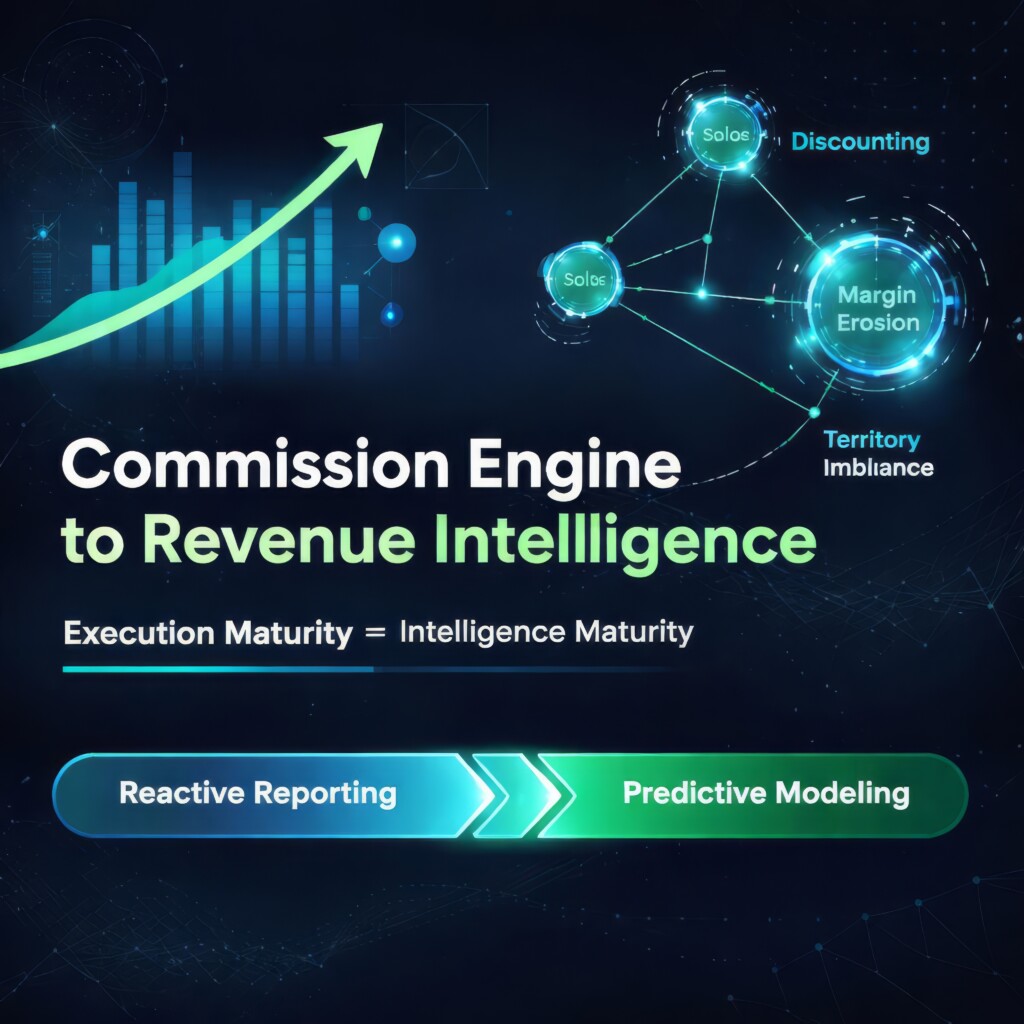
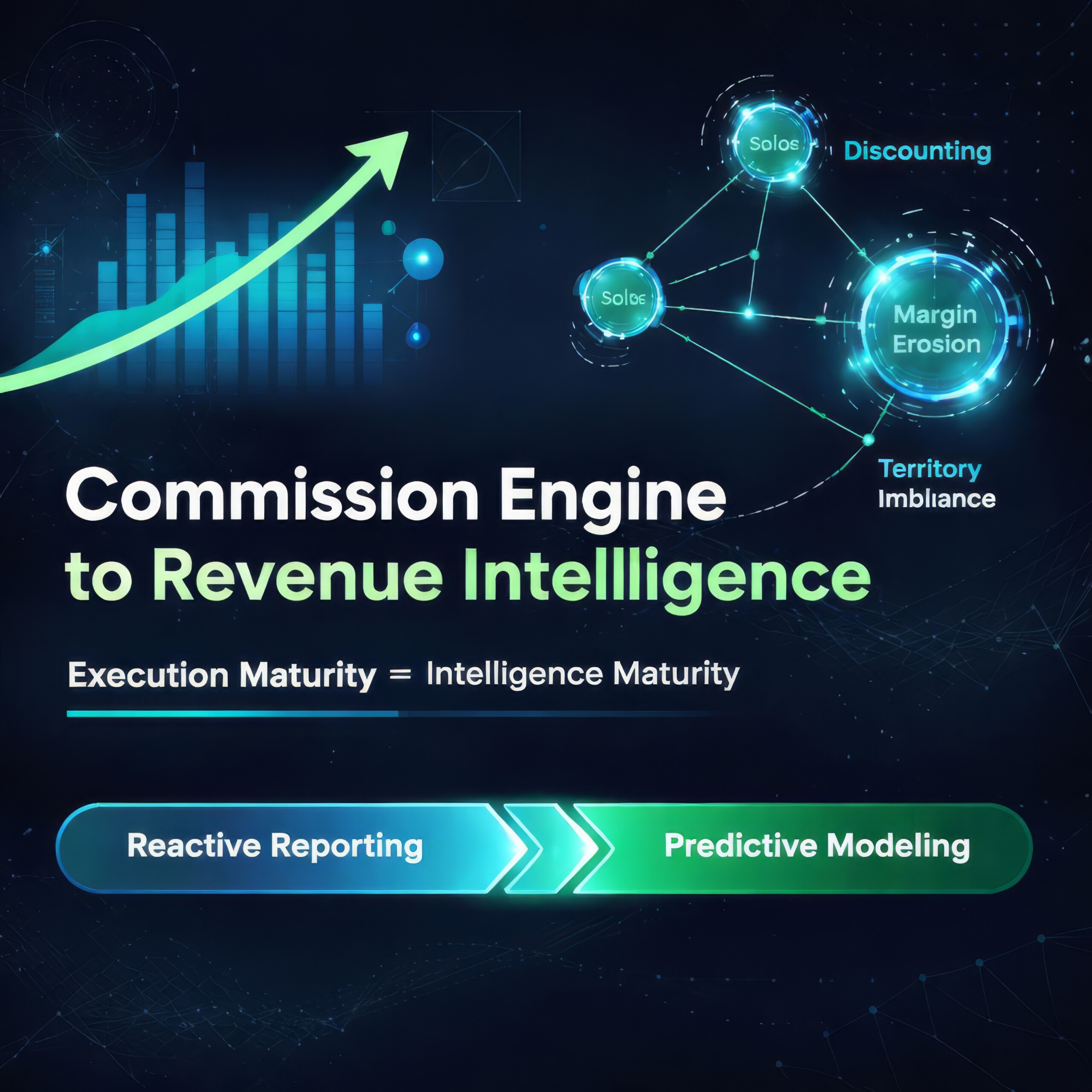
Sales compensation systems were built to calculate commissions accurately and on time. At scale, organizations invest heavily in automation to eliminate manual errors, reduce disputes, and ensure governance. But once execution is stabilized, a critical question emerges:
Are you using your compensation data strategically or just operationally?
In 2026, leading revenue organizations no longer treat sales compensation as a payout engine. They treat it as a behavioral intelligence platform capable of predicting revenue risk, influencing selling patterns, and improving profitability.
Why Most Compensation Systems Remain Reactive
Even after implementing Sales Compensation platforms, many companies still operate in reactive mode.
Typical characteristics include:
1.Reports generated only after payout cycles
2.Lagging visibility into quota attainment
3.Limited margin tracking within incentive calculations
4.Compensation reviews triggered only by disputes
For example, a company may discover in Q4 that attainment dropped in a strategic product line. By the time finance identifies the issue through payout reports, the selling behavior has already shifted for months. Compensation data was available — but not interpreted as an early warning signal.
Execution maturity eliminates errors. Intelligence maturity prevents revenue leakage.
The Untapped Goldmine Inside Compensation Data
Every incentive calculation contains embedded signals about sales behavior. Compensation data reveals:
1.Discounting trends at rep and region level
2.Product mix shifts
3.Margin erosion patterns
4.SPIFF dependency for deal acceleration
5. Territory imbalance
6. Ramp inefficiencies in new hires
Consider a SaaS organization noticing increased payout variability across teams. A deeper compensation analysis reveals that reps are prioritizing high-commission but low-margin products. The plan unintentionally incentivized revenue at the expense of profitability.
Without compensation intelligence, leadership sees revenue growth. With intelligence, they see margin compression risk.
Compensation data is not just financial output it is behavioral telemetry.
Moving From Calculation Engine to Revenue Intelligence Platform
To convert compensation systems into strategic assets, organizations must develop five core capabilities:
1. Real-Time Attainment Visibility
Leaders need intra-period tracking, not end-of-quarter summaries. Real-time dashboards allow Sales and Revenue Operations teams to detect stalled pipelines or over-concentration in specific territories before performance collapses.
2. Profitability-Weighted Incentive Modeling
Revenue alone is insufficient. Compensation structures must incorporate contribution margin or strategic product weighting. Intelligent systems model payout impact before plan launch, preventing unintended financial exposure.
3. Behavioral Deviation Alerts
If a rep’s discount rate spikes or a team over-indexes on non-strategic SKUs, automated alerts should flag the deviation. Compensation becomes a governance sensor.
4. Pre-Payout Cost Forecasting
Finance teams must predict commission liability throughout the quarter. Instead of waiting for final attainment data, scenario modeling estimates payout exposure under multiple revenue assumptions.
5. Scenario Simulation Before Plan Rollout
Before launching a fiscal plan, leading organizations simulate historical performance against proposed structures. If 80% of reps would have missed threshold attainment under last year’s numbers, motivation risk is identified early.
Execution ensures payment accuracy. Intelligence ensures behavioral alignment.
Predictive Compensation Modeling: The Next Frontier
The next evolution is predictive modeling.
Advanced organizations are leveraging AI-driven analytics layered on top of compensation platforms to:
1.Forecast attainment probability at rep level
2. Identify at-risk territories mid-quarter
3. Measure incentive elasticity (how payout changes impact performance)
4. Stress-test accelerators and decelerators before launch
For example, if predictive modeling shows that only 30% of reps are likely to hit accelerator tiers under current pipeline conditions, leadership can adjust thresholds before demotivation sets in.
Instead of reacting to missed quotas, organizations influence outcomes in real time.
This shift transforms compensation from a historical reporting function into a forward-looking revenue steering mechanism.
Governance 2.0: From Control to Continuous Optimization
Traditional compensation governance focused on:
1. Audit trails
2. Payment accuracy
3. Policy documentation
4.Compliance controls
While these remain foundational, governance maturity now includes continuous optimization.
Modern Revenue Operations teams conduct quarterly behavioral reviews asking:
1.Are accelerators driving strategic product penetration?
2.Is payout distribution aligned with performance differentiation?
3.Are new hires ramping within expected timeframes?
4.Is compensation cost aligned with revenue efficiency targets?
Compensation intelligence feeds executive dashboards that connect payouts to revenue productivity metrics such as cost of sales ratio and contribution margin.
The conversation moves from “Were commissions calculated correctly?” to “Is our incentive architecture maximizing profitable growth?”
The Strategic Shift Revenue Leaders Must Make
To remain competitive in volatile markets, CROs and CFOs must reframe compensation as strategic infrastructure.
Sales compensation is:
1.A behavioral operating system
2.A revenue signal engine
3.A profitability control lever
4.A predictive risk dashboard
Organizations that treat compensation data as static output will always operate one quarter behind. Those that transform it into strategic intelligence gain forward visibility, faster course correction, and stronger alignment between sales behavior and enterprise goals.
Future-proofing compensation execution was the first step.
Turning compensation data into strategic advantage is the next.
The revenue leaders who master this shift will not just pay accurately they will steer growth deliberately.

Author admin
Related Posts

Commission period is approved, payroll is run, and you start getting calls from your sellers because there is a transaction that was updated 2...

What have you learned from your 2026 sales comp plan that you want to fix for 2027? That is the question that should drive...